Sometimes, we enter relationships expecting to be able to fix someone. I think Stefani thought she would fix my affinity for indoors and my corresponding disdain for outdoors. I maintain that converting me into an outdoorsy fellow is a fool’s errand, but Stefani persists. Gardening, an indoor-feeling outdoor activity, is one of our most successful compromises. In the last couple of years, we have been looking for secular community in our not-very-secular town. We became aware of a small community garden operated for free by a local Lutheran congregation.

To the left of the garden boxes is an orchard that will soon surround a community meditation space. The vision for its centerpiece was a large brick labyrinth.
Labyrinths are not mazes to outwit but single, slow paths that invite you to walk, breathe, and be mindful about your surroundings. Strolling a labyrinth is a simple, physical way to turn inward and then come back out again, something like a walking meditation.
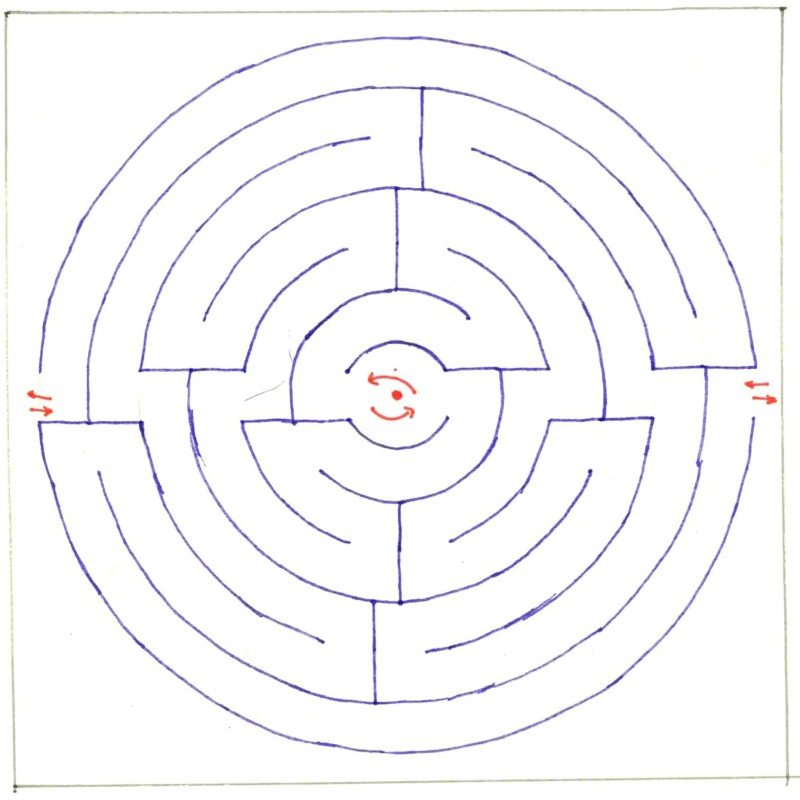
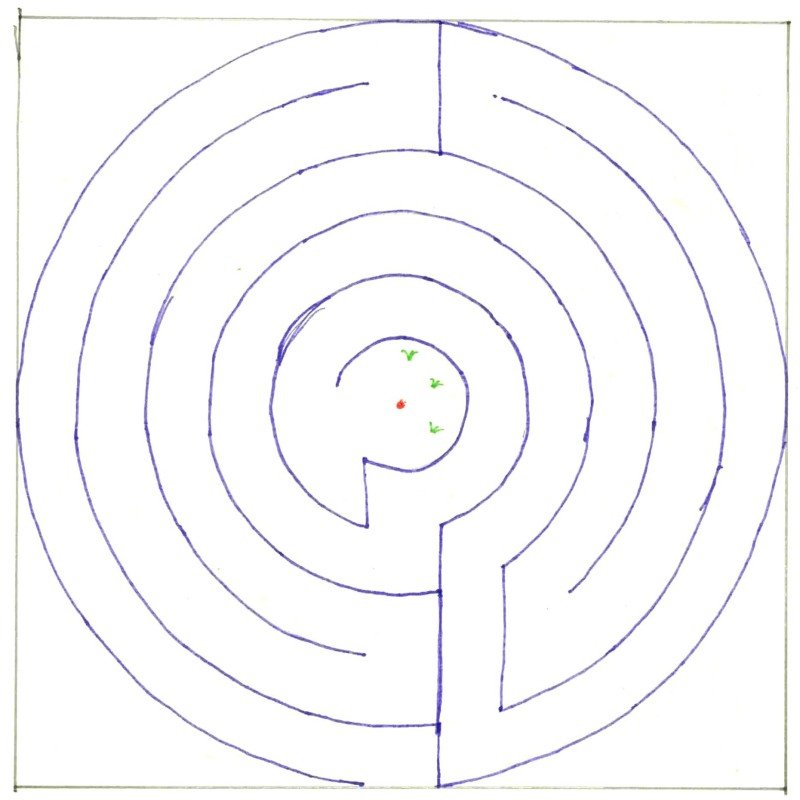
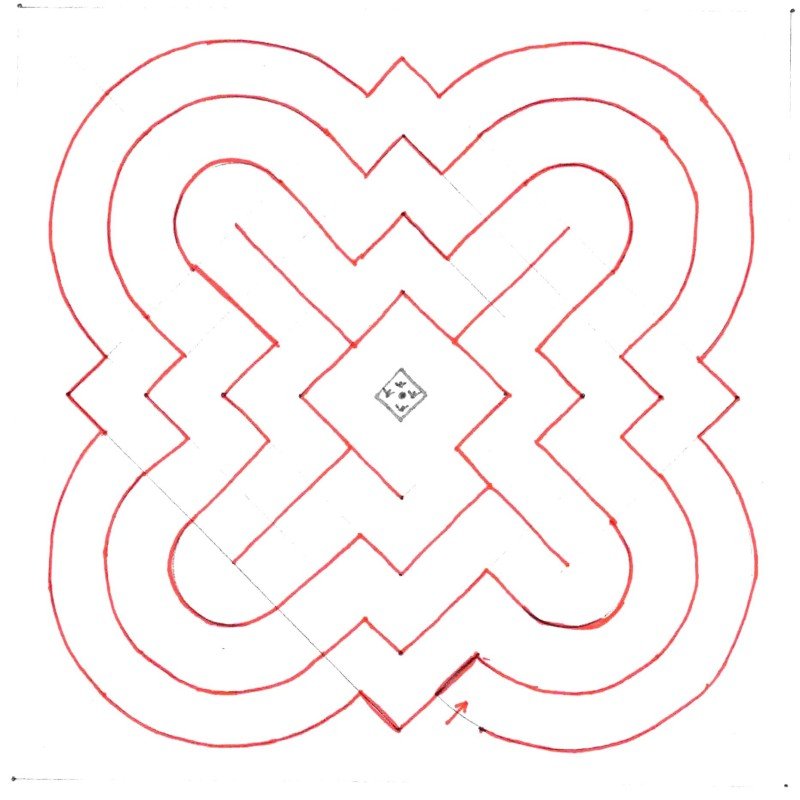
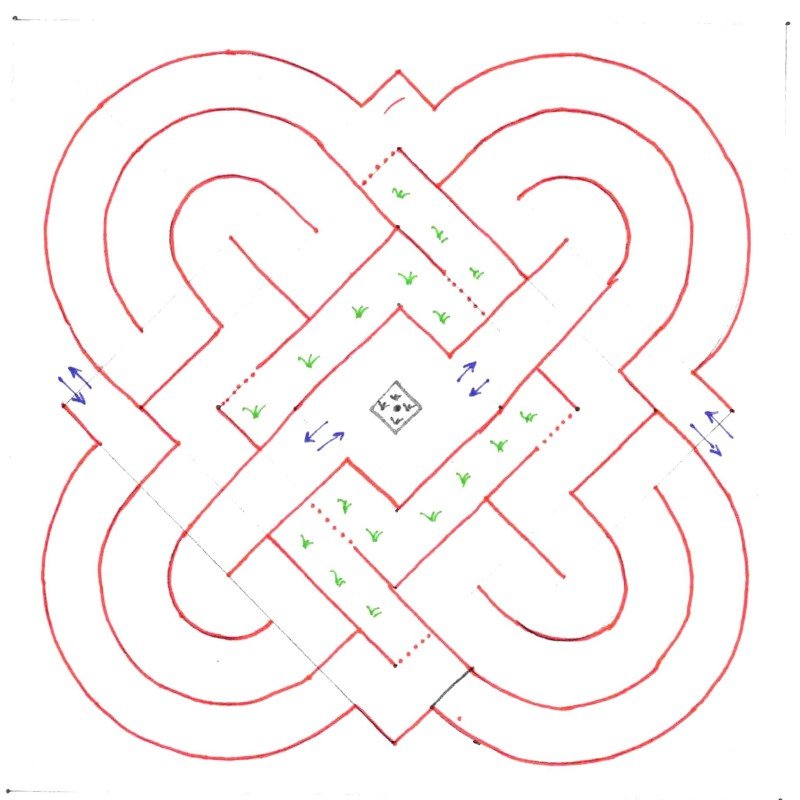
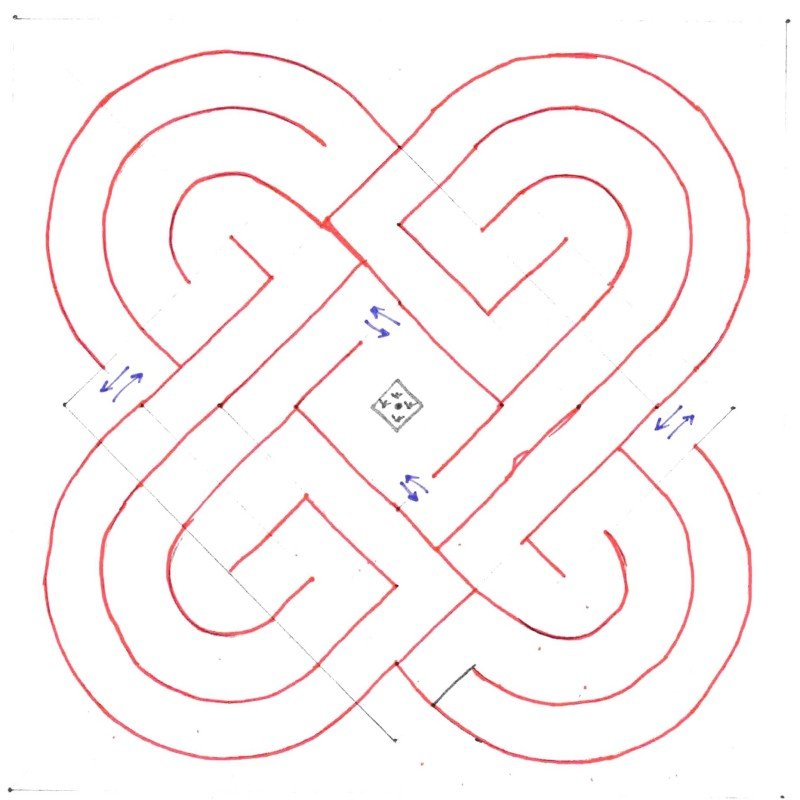
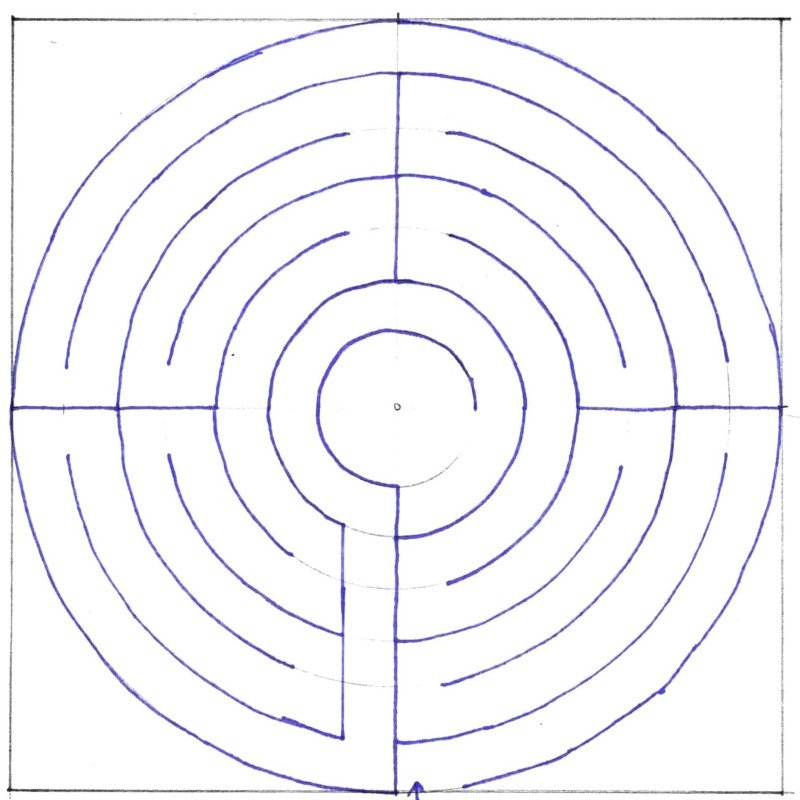
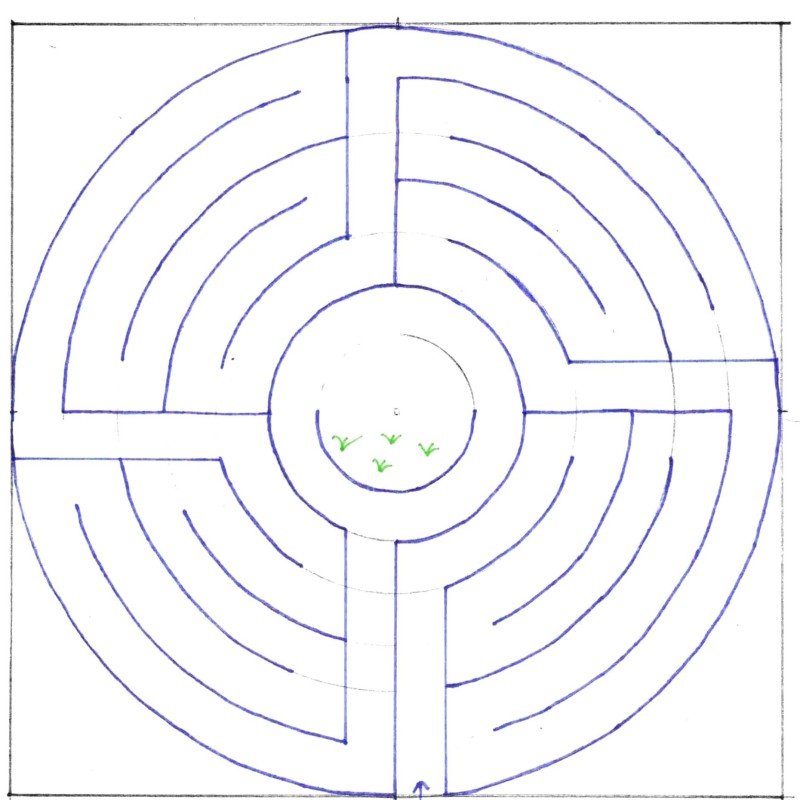
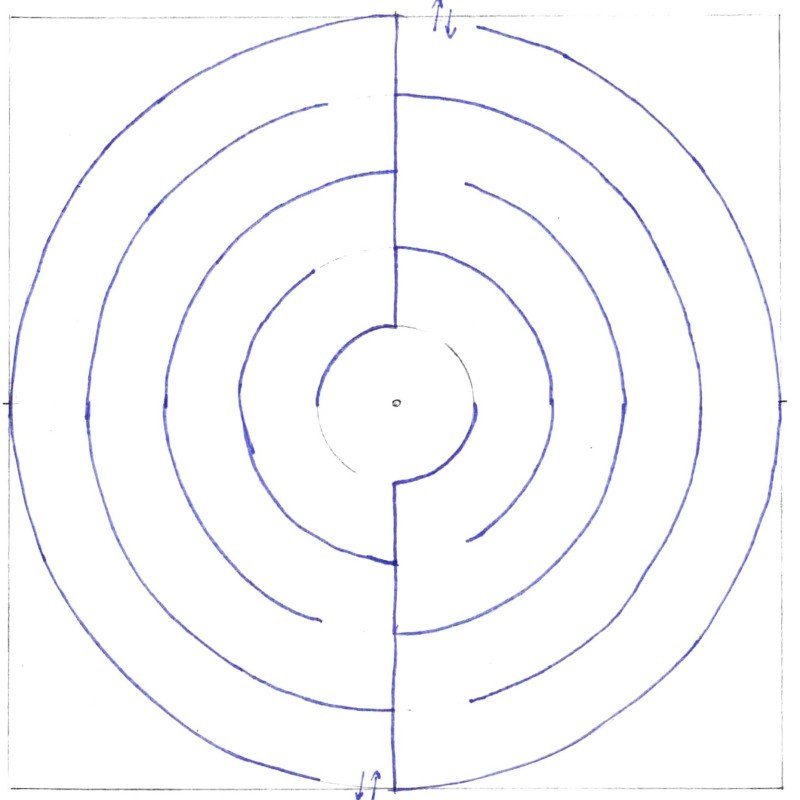
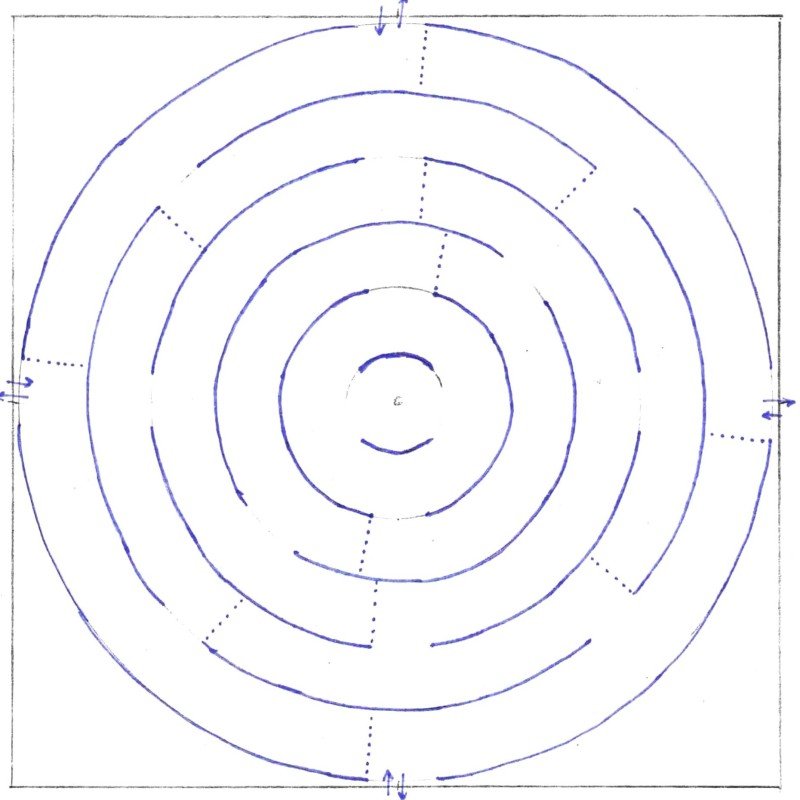
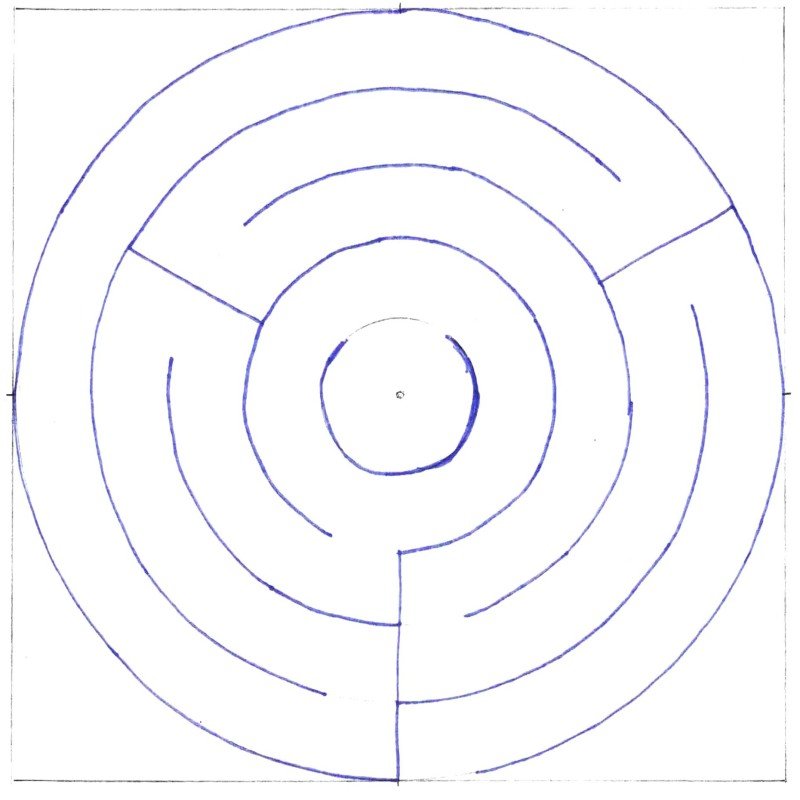
As one of the garden’s resident “people who know math”, I designed a few options. They are all attached at the bottom of the post in case you’d like to design a labyrinth of your own. Here’s the one we chose:
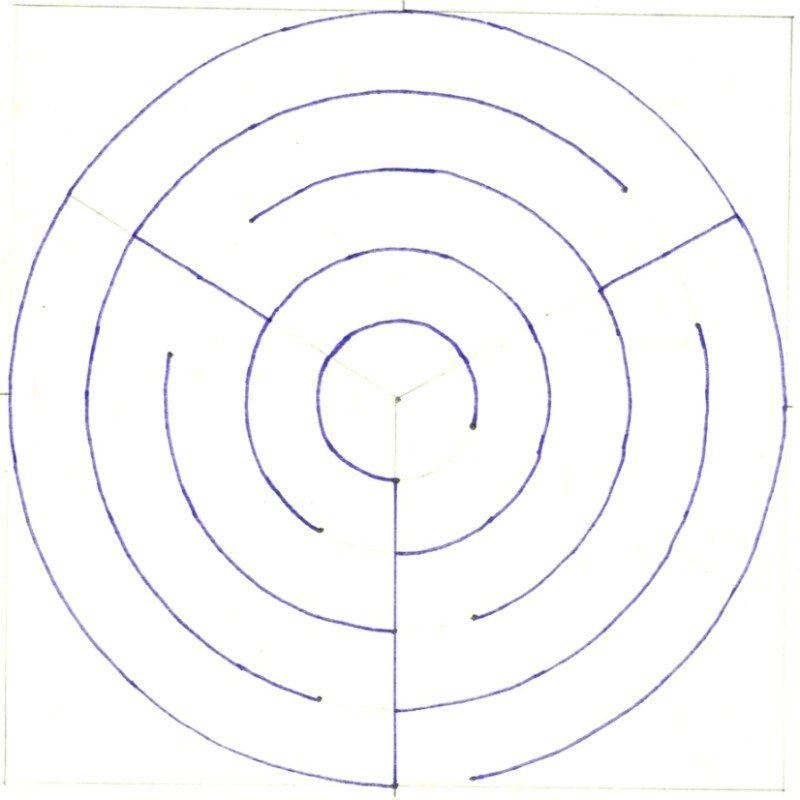
If you’re curious about the math I did to calculate how many bricks we’d need to buy, here is that: Labyrinth Math PDF. We were able to get the bricks on sale, so they cost about $350 total.
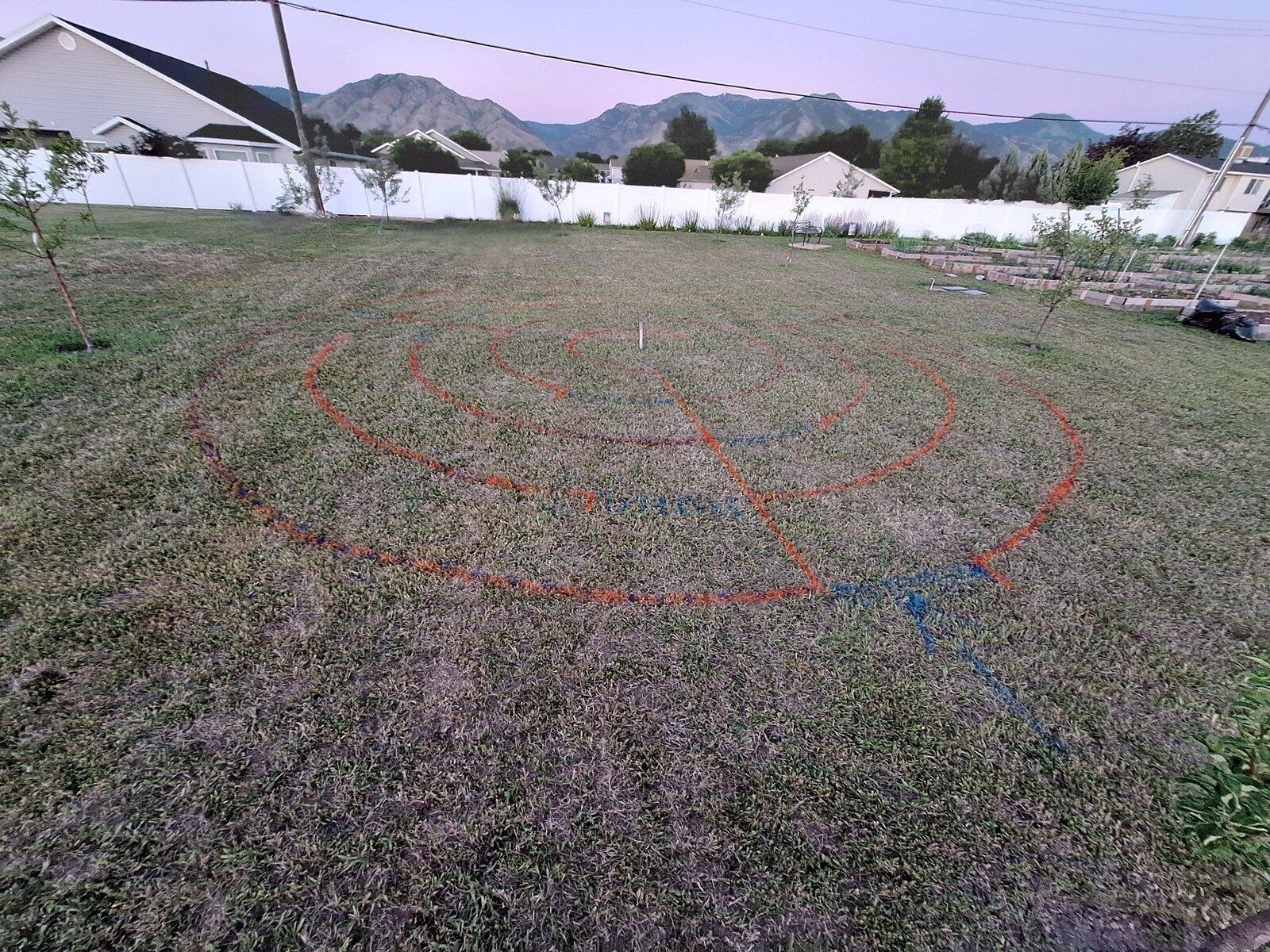
The next step was, of course, transferring the design to the spot that was dedicated for the labyrinth. I used a couple of bottles of lawn marking paint. The blue lines were for my own edification: I used them to mark the entrance and draw my circles and angles. The orange lines were where the bricks were supposed to go. I tied a string between a central stake and my can of paint and created an improvised compass to draw nice circles. I painted it just on time Friday night: the sun was about to go down.
Then, on Saturday morning, it was time for a big community work day and 34 people showed up to help! It took about 3 hours to dig trenches where the labyrinth had been marked. We filled the trenches with sand, placed bricks along the template, then poured sand on top to fill in the cracks.
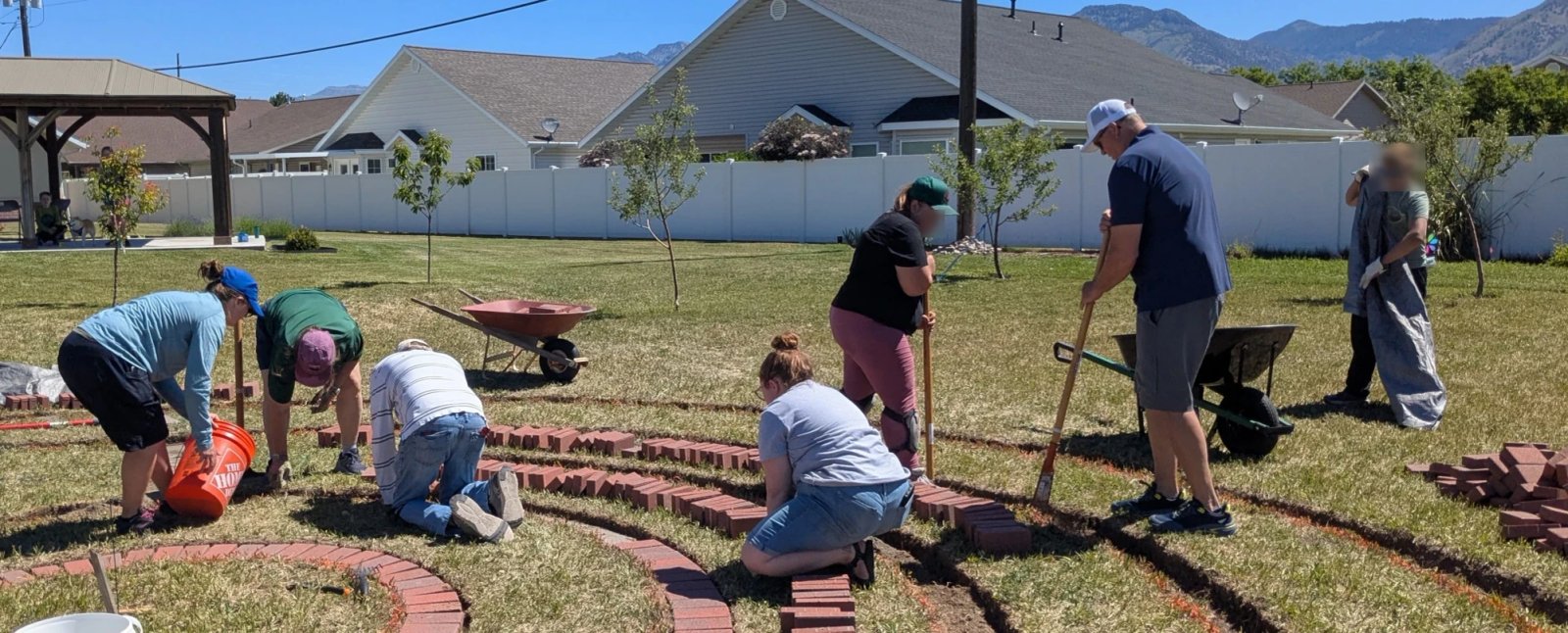
We finished the entire project in about 5 hours! There is still some final polishing and wearing to do: over time, the sand will even out, the bricks will become worn and level, and the paint will wash out of the grass. But the project is all done, and I am so proud to have contributed to it.
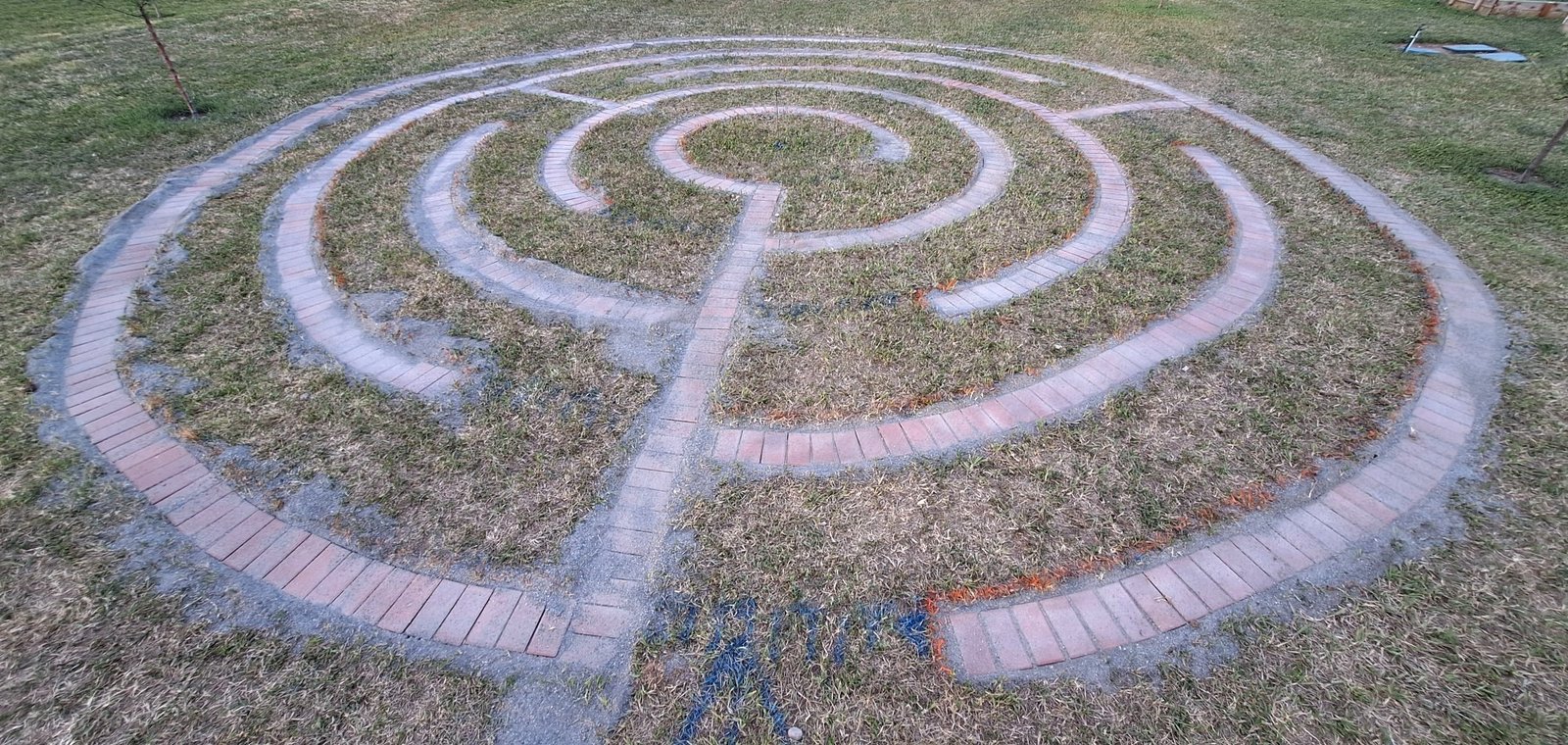
Links to Designs (in case you want to make a labyrinth of your own): 1 | 2 | 3 | 4 | 5 | 6 | 7 | 8 | 9 | 10 (the final design above is based on 10)